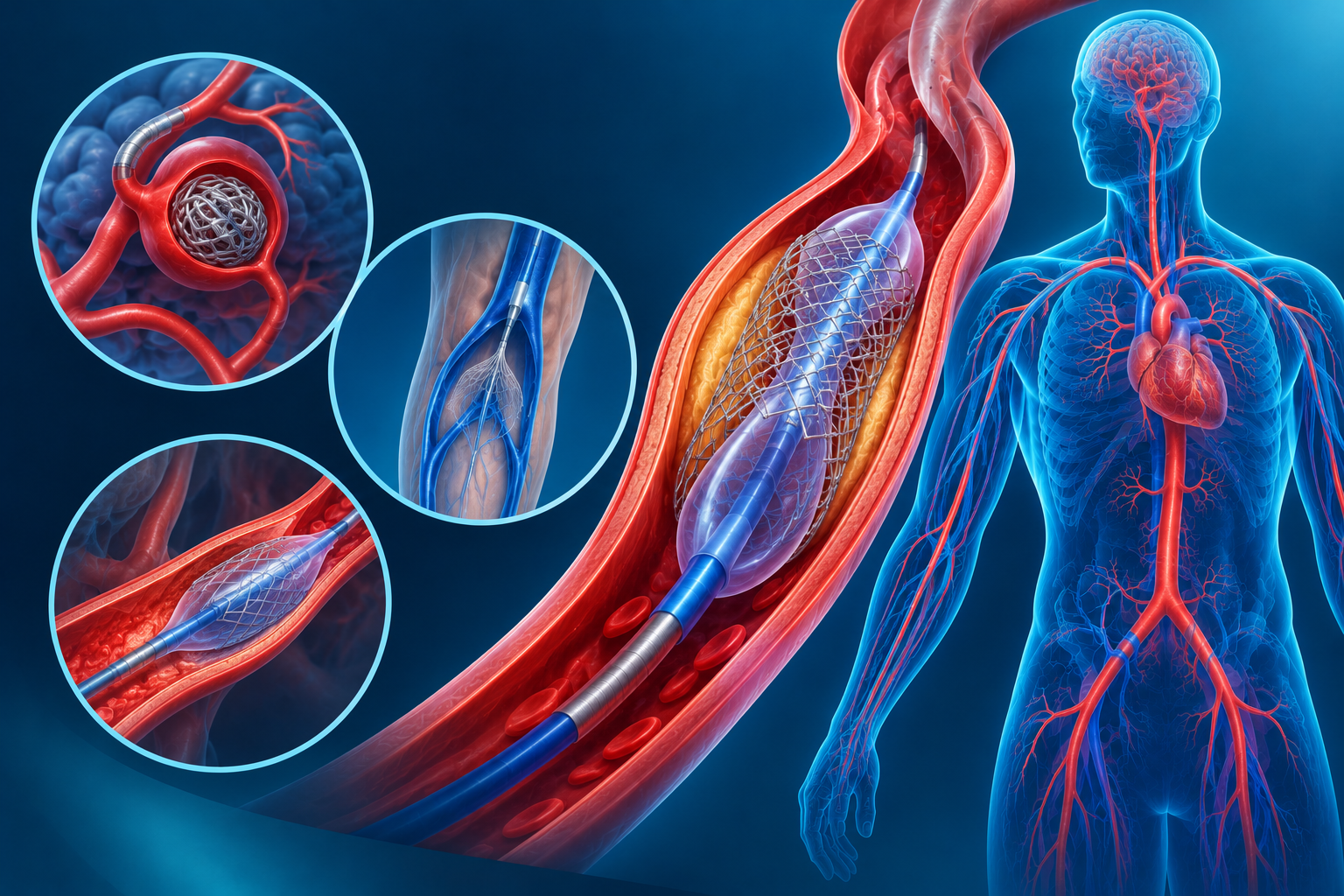
VASCULAR HEALTH & INTERVENTION

Vascular Intervention Understanding circulation. Exploring treatment options.

Vascular conditions can affect the arteries and veins that carry blood throughout the body. Learn about vascular assessment and minimally invasive, image-guided treatment approaches that may be considered according to an individual's clinical needs.

Dr. Roopa Seshadri Stroke, Neuro-Vascular Intervention & Aneurysm Care

KMC Registration No. 69765

Illustrative clinical setting representing vascular assessment and medical care
Vascular Care Assessment · Treatment planning · Follow-up
Arterial & Venous Circulation assessment
Image-Guided Care When clinically appropriate

When blood circulation needs attention.

The vascular system consists of arteries, veins and smaller blood vessels. Conditions affecting these vessels may interfere with blood flow, cause discomfort or lead to complications that require medical assessment.

Vascular intervention refers to procedures used to evaluate or treat selected blood-vessel conditions. Depending on the diagnosis, these may include catheter-based techniques performed using medical imaging, as well as other appropriate treatment options.

Vascular conditions, explained clearly.

Explore common arterial and venous conditions and understand why assessment and management may differ from person to person.

01

Peripheral Artery Disease

Narrowing of arteries, often affecting the legs, can reduce blood supply to the muscles and other tissues.

Possible features

Leg discomfort while walking, cold feet, slow-healing wounds or changes in skin colour.

Assessment may include pulse examination, ankle-brachial index testing and vascular imaging.

02

Varicose Veins

Enlarged, twisted veins can develop when the valves responsible for directing blood back towards the heart do not function effectively.

Possible features

Visible veins, leg heaviness, aching, swelling, itching or skin changes around the ankles.

Duplex ultrasound may help assess venous blood flow and valve function before treatment is considered.

03

Deep Vein Thrombosis

Deep vein thrombosis (DVT) occurs when a blood clot forms in a deep vein, commonly in the leg.

Possible features

One-sided leg swelling, pain, tenderness, warmth or a change in skin colour. Some people have no symptoms.

Prompt medical assessment is important. Treatment depends on the location of the clot and individual risk factors.

04

Aortic & Large-Vessel Conditions

Conditions affecting the aorta and other major blood vessels may include aneurysms, narrowing or blockages.

Why evaluation matters

The location, size, blood-flow effects and risk of complications help guide clinical decisions.

Assessment and management may involve vascular imaging and referral to the appropriate specialist team.

05

Venous Ulcers & Leg Wounds

Some persistent wounds around the lower leg or ankle are associated with impaired venous circulation.

What may be assessed

Wound characteristics, circulation, swelling, underlying venous disease and signs of infection.

Care may require wound management, compression when appropriate and treatment of the underlying cause.

06

Other Vascular Conditions

Selected conditions affecting blood vessels elsewhere in the body may require specialist evaluation and image-guided management.

Individual assessment

Symptoms, examination findings, imaging and medical history inform the next steps.

The appropriate service or specialist depends on the particular condition and available clinical facilities.

BLOOD FLOW VASCULAR IMAGING

What is vascular intervention?

Vascular intervention includes selected procedures used to diagnose or manage blood-vessel conditions. In catheter-based procedures, a clinician may guide a thin tube through a blood vessel using imaging to reach a particular treatment area.

Depending on the condition, possible approaches may include angioplasty, stenting, embolisation or other endovascular techniques. Not every condition is suitable for these procedures, and not every patient requires an intervention.

01

Clinical assessment Symptoms, examination and medical history

02

Diagnostic evaluation Appropriate scans and vascular investigations

03

Individualised planning Discussion of options, risks and alternatives

From assessment to a care plan.

The evaluation process depends on the condition, urgency and information available at consultation.

01

Discuss symptoms

Review symptoms, previous diagnoses, medicines and relevant medical history.

02

Review investigations

Assess available reports and determine whether further tests are needed.

03

Discuss options

Consider suitable medical, procedural or surgical options, including their risks.

04

Plan follow-up

Discuss monitoring, recovery considerations and follow-up based on the treatment plan.

Frequently asked questions.

What symptoms may indicate a vascular problem?

Symptoms can include leg pain during walking, persistent swelling, prominent veins, non-healing wounds, changes in skin colour or temperature, and pain at rest. Symptoms vary by condition; sudden or severe symptoms require urgent assessment.

Are all vascular conditions treated with a procedure?

No. Management may include observation, lifestyle measures, medicines, compression when appropriate, endovascular treatment or surgery. The choice depends on the diagnosis, severity, individual health factors and clinical findings.

What is an endovascular procedure?

An endovascular procedure accesses blood vessels from inside, often using a catheter and medical imaging. The specific technique, expected recovery, risks and alternatives depend on the condition being treated.

What should I bring to a consultation?

Bring relevant scan reports and images, previous medical records, a current medicine list, details of allergies and information about previous procedures, if applicable.

Does every patient need vascular imaging?

Not necessarily. Depending on the symptoms and examination, a clinician may recommend duplex ultrasound, CT angiography, MR angiography or another investigation. The appropriate test is determined individually.

Need information about vascular assessment?

Contact the clinic to enquire about consultation availability and the information required for an appointment. Suitability for any investigation or procedure can only be assessed by a qualified clinician.

Call +91 80885 69130
CONSULTATION LOCATION

Dr. Roopa Seshadri

Address

2nd Floor, Boggaram Towers,
12th Main Road, 4th Block,
Jayanagar, Bengaluru – 560011

View directions in Google Maps

Medical information disclaimer: This page provides general educational information and is not a substitute for individual medical advice, diagnosis or treatment. Treatment options and outcomes vary between individuals. Please consult an appropriately qualified healthcare professional for advice about your condition. In an emergency, seek immediate medical care.