AREAS OF CLINICAL PRACTICE

Stroke, Neuro-Vascular Intervention & Aneurysm Care

Explore information about neurological and vascular conditions, diagnostic evaluation and minimally invasive interventional approaches within Dr. Roopa Seshadri's areas of clinical practice.

Dr. Roopa Seshadri KMC Registration No. 69765
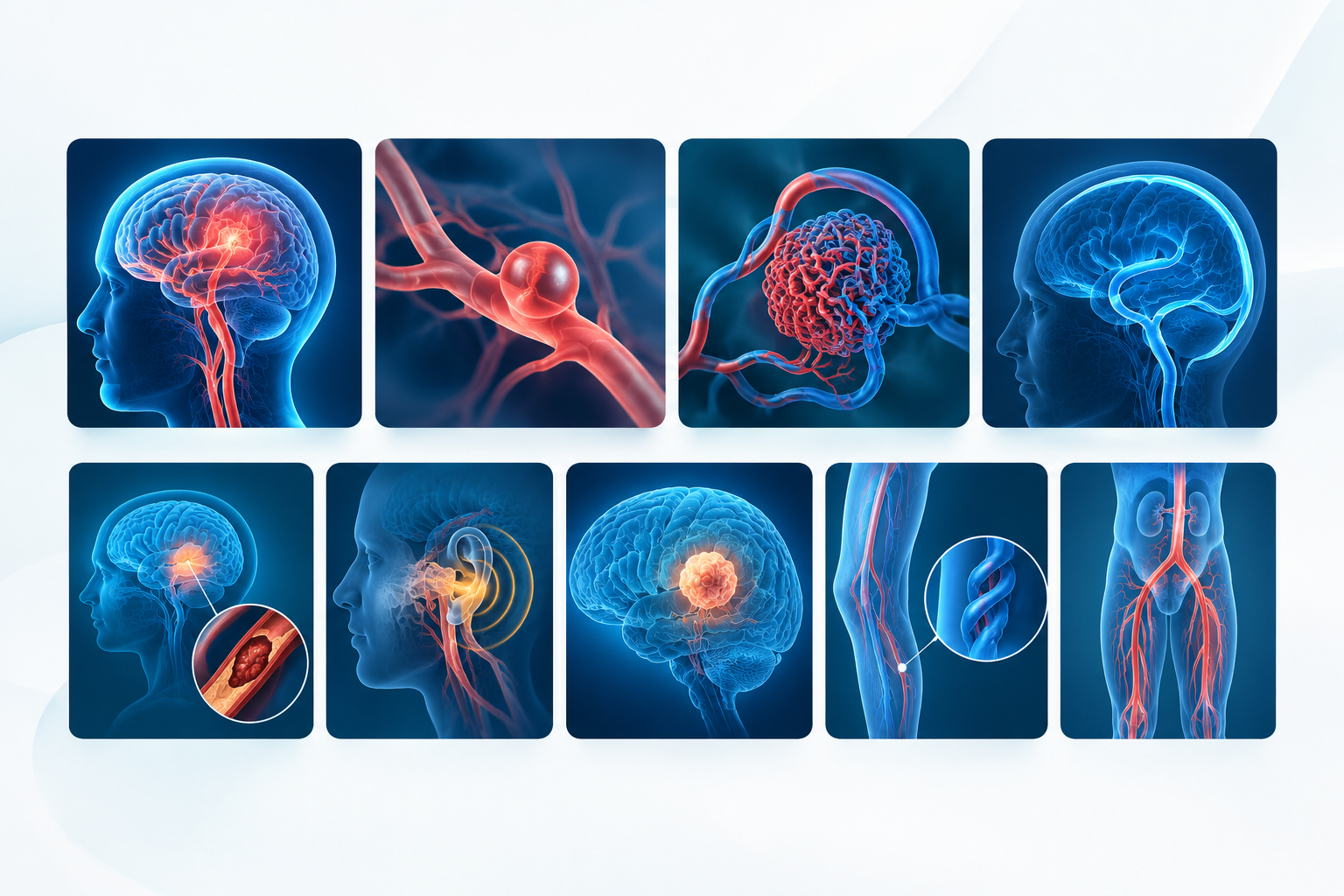
Medical illustration of the brain and its vascular network
NEUROVASCULAR CARE
Minimally Invasive Interventional approaches
01 / BRAIN & NEUROVASCULAR

Understanding Brain & Vascular Conditions

Conditions affecting the brain and its blood vessels can require timely assessment, specialised imaging and individualised treatment planning. Learn about the conditions and interventional approaches listed below.

01.02

Brain Aneurysm

A cerebral aneurysm is a localised bulge in a brain blood vessel. Evaluation considers its size, location, shape, symptoms and other individual risk factors.

Aneurysm assessment Endovascular options
01.03

Brain Bleed

Bleeding in or around the brain requires urgent medical assessment. Investigations and treatment depend on the bleeding site, cause and clinical condition.

Haemorrhage Vascular evaluation
01.04

AVM & AVF

Arteriovenous malformations and fistulas are abnormal connections involving blood vessels. Assessment helps determine their anatomy and appropriate management.

Vascular malformations Imaging assessment
01.05

Idiopathic Intracranial Hypertension

IIH involves increased pressure around the brain without an identified mass or other explanatory cause. Assessment may include neurological and eye evaluation.

IIH Venous assessment
01.06

Carotid Artery Disease

Narrowing or other disease affecting the carotid arteries may influence blood supply to the brain. Evaluation depends on symptoms and vascular imaging.

Arterial disease Stroke risk assessment
01.07

Cerebral Venous Thrombosis

CVT involves a blood clot in the brain's venous drainage system. Symptoms and treatment vary, and timely clinical assessment is important.

CVT Venous disorders
01.08

Pulsatile Tinnitus

Pulsatile tinnitus is a rhythmic sound that may coincide with the heartbeat. Selected cases require investigation for an underlying vascular cause.

Vascular assessment Diagnostic evaluation
01.09

Brain Tumours & Meningioma

Brain tumours and meningiomas require evaluation based on their location, imaging characteristics, symptoms and the appropriate multidisciplinary care pathway.

Brain lesions Image-guided evaluation
02 / PERIPHERAL & SYSTEMIC VASCULAR

Vascular Conditions & Interventions

Vascular conditions can affect veins and arteries throughout the body. Evaluation and treatment depend on the affected vessel, symptoms, imaging and overall health.

02.01

Varicose Veins & Venous Ulcers

Assessment of enlarged superficial veins, leg discomfort, swelling and venous ulcers. Suitable management depends on clinical examination and venous evaluation.

VENOUS CONDITIONS
02.02

Deep Vein Thrombosis

DVT is a blood clot in a deep vein, commonly in the leg. Assessment considers symptoms, clot location and the risk of complications.

VENOUS THROMBOSIS
02.03

Peripheral Artery Disease

Reduced blood flow through arteries supplying the limbs may cause pain, reduced mobility or wounds that need clinical assessment.

ARTERIAL CONDITIONS
02.04

Aortic & Large-Vessel Conditions

Aortic aneurysms, narrowing and other large-vessel disorders require assessment based on anatomy, symptoms and the need for specialist care.

LARGE-VESSEL DISEASE
03 / OTHER INTERVENTIONAL SERVICES

Additional Areas for Clinical Evaluation

The following services appear in the centre's supplied service materials. Please confirm their current availability and the responsible clinician before publishing them as active services.

Women's Health Interventions

Selected breast-related conditions and uterine fibroids, including embolisation where clinically indicated and available.

Men's Vascular Health

Varicocele and related vascular conditions, subject to specialist assessment and confirmed service availability.

Image-Guided Procedures

Diagnostic or interventional procedures, including selected biopsies and pain interventions, where offered.

04 / THE CLINICAL APPROACH

From Assessment to Treatment Planning

The evaluation pathway depends on the condition, clinical urgency, investigation results and individual patient needs.

01

Clinical Assessment

Review of symptoms, medical history and relevant examination findings.

02

Diagnostic Evaluation

Relevant imaging, laboratory investigations or specialist assessments when indicated.

03

Individualised Planning

Discussion of appropriate options, potential risks, benefits and alternatives.

04

Follow-Up & Care

Follow-up arrangements based on the diagnosis, treatment and clinical requirements.

CONSULTATION INFORMATION

Seeking a Specialist Consultation?

Contact the practice to enquire about consultation availability and the information required for your visit.

Dr. Roopa Seshadri's Neuro 2nd Floor, Boggaram Towers, 12th Main Road, 4th Block, Jayanagar, Bengaluru – 560011
DR. ROOPA SESHADRI KMC Reg. No. 69765 Professional information & patient education