01
Identify the Cause
Assessment may involve a review of symptoms, medical history, physical examination and relevant imaging or other investigations.
Pain can affect movement, sleep, everyday activities and quality of life. Pain intervention brings together clinical assessment and selected treatment approaches to help determine appropriate options for individual patients.
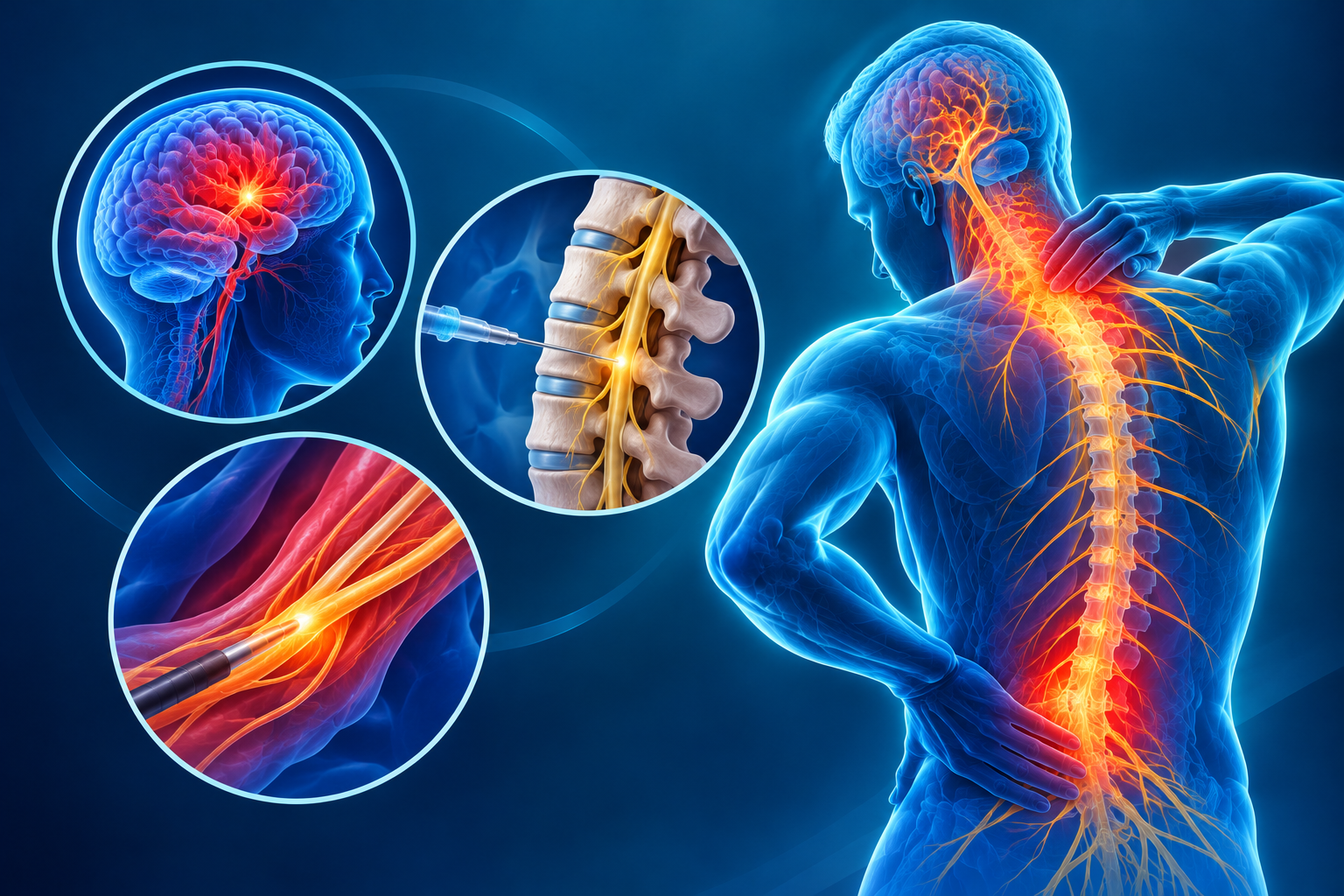
Pain intervention refers to selected medical procedures and techniques used to assess or manage pain. Depending on the underlying condition, these may include targeted, image-guided injections or other minimally invasive approaches when clinically appropriate.
Assessment may involve a review of symptoms, medical history, physical examination and relevant imaging or other investigations.
When indicated, selected procedures may aim to address a specific pain-generating structure or provide symptom relief.
Follow-up helps assess the response to treatment, monitor for complications and determine whether further care is needed.
Pain may arise from nerves, joints, muscles, the spine or other structures. The appropriate approach depends on the diagnosis, severity, duration and effect on daily activities.
The following are examples of concerns that may warrant assessment. Their inclusion does not imply that a particular intervention is suitable for every patient or is available at every practice.
Enquire about consultationBack or neck pain may require evaluation for spinal, muscular, joint or nerve-related causes.
Burning, shooting, tingling or radiating pain can occur with several nerve-related conditions.
Pain that continues or returns may need a broader review of its causes and management.
Headaches require appropriate diagnosis; intervention is considered only for selected conditions when clinically indicated.
Depending on the diagnosis, management may involve one or more approaches. Not every patient requires a procedure.
Review of the pain pattern, possible causes, previous treatments and investigations to help guide decisions.
Certain injections or targeted procedures may use imaging guidance to help position a needle or instrument accurately.
Depending on the condition, management may include medication, appropriate physical rehabilitation, lifestyle guidance or referral to another specialist.
Important: These are general examples of pain-management approaches, not a confirmed list of procedures offered by Dr. Roopa Seshadri. Specific services should be confirmed with the practice.
A consultation helps establish the nature of the problem and whether specialist assessment or a particular treatment approach is appropriate.
Describe where the pain occurs, when it began, what affects it and how it impacts daily life.
Bring available scans, reports, prescriptions and details of previous treatments.
Ask about expected benefits, limitations, alternatives, possible complications and recovery.
Agree on suitable next steps and how progress or any adverse effects should be reviewed.
General answers to help you prepare for a discussion about pain and possible treatment options.
Contact the practice to enquire about consultations.
+91 80885 69130Pain intervention includes selected procedures that may be considered as part of pain management. The appropriate approach depends on the underlying diagnosis and individual assessment.
No. Many conditions are managed without an intervention. Depending on the cause, treatment may involve medication, rehabilitation, observation or other specialist care.
No procedure is entirely risk-free. Risks vary by the procedure, the treatment site and the patient's medical circumstances. Discuss potential complications and alternatives with the treating clinician before deciding.
Bring relevant medical records, scan reports, current medication details, allergies and information about treatments you have already tried, if available.
Contact the practice using the telephone number below to ask about consultation availability and whether the relevant service is offered. Availability should be confirmed directly.
Contact the practice for information about consultation availability, clinical assessment and relevant services.
Call +91 80885 69130
2nd Floor, Boggaram Towers,
12th Main Road, 4th
Block,
Jayanagar, Bengaluru – 560011
Dr. Roopa Seshadri · KMC Registration No. 69765
Medical information disclaimer: This page provides general educational information and is not a substitute for individual medical assessment, diagnosis or treatment advice. Treatment options, benefits and risks vary between patients. The services described are illustrative and should not be taken as confirmation that every procedure is available at this practice. Please consult an appropriately qualified healthcare professional for advice about your circumstances. For sudden severe pain, new weakness, loss of sensation, difficulty speaking, chest pain or other potentially serious symptoms, seek urgent medical care as appropriate.