Raised Intracranial Pressure
Pressure around the brain is higher than normal, without an identified cause explaining the increase.
Understanding raised pressure around the brain, its possible causes, symptoms and approaches to clinical assessment and management.
Idiopathic intracranial hypertension (IIH) is a condition in which pressure around the brain is elevated without an identifiable underlying cause. Timely assessment is important, particularly when vision may be affected.
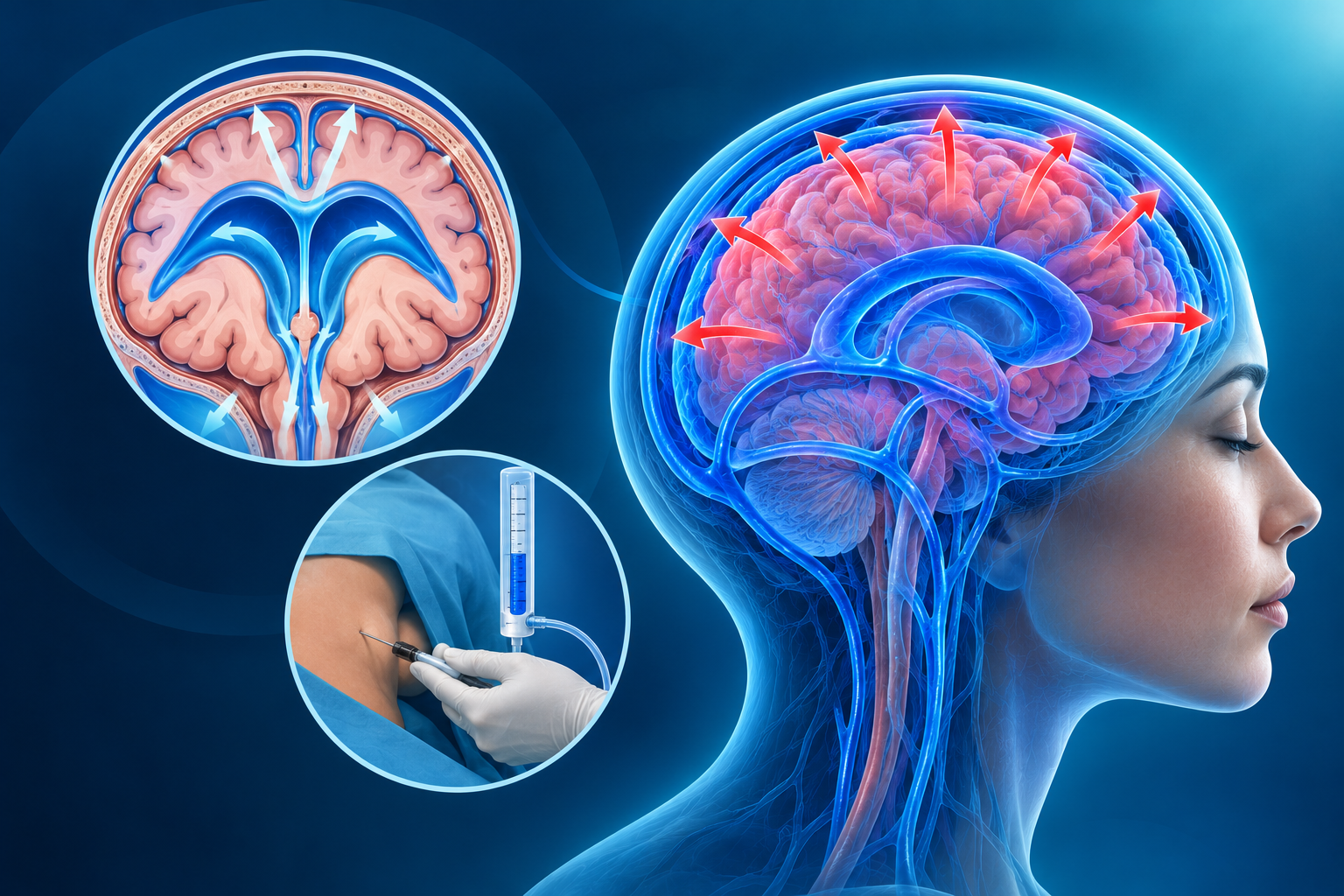
Pressure around the brain is higher than normal, without an identified cause explaining the increase.
Headaches, brief episodes of visual dimming and pulsatile tinnitus can occur.
Evaluation may involve eye examinations, brain imaging and measurement of cerebrospinal fluid pressure.
The brain and spinal cord are surrounded by cerebrospinal fluid (CSF), which provides cushioning and other important functions. In IIH, pressure within this fluid system becomes elevated.
The word “idiopathic” means that no underlying cause has been identified after appropriate evaluation. IIH can cause swelling of the optic nerves, known as papilloedema, and may threaten vision if not recognised and managed appropriately.
Symptoms and severity differ from person to person. A clinical assessment helps determine whether IIH is likely and whether another condition could explain the symptoms.
Important: A persistent headache alone does not establish a diagnosis of IIH. Other possible causes must be considered.
Symptoms may develop gradually or fluctuate. Not everyone experiences the same combination, and these symptoms can also occur with other medical conditions.
Frequent or persistent headaches, sometimes accompanied by nausea or sensitivity to light.
Brief episodes of dimmed vision, blurred vision or other changes in visual function.
A rhythmic whooshing or pulsing sound in the ear that may coincide with the heartbeat.
Some people develop double vision, which may occur when eye movement nerves are affected.
The presence or absence of any one symptom cannot confirm or exclude IIH. Seek an appropriate clinical evaluation for persistent or concerning symptoms.
Diagnosis requires a structured evaluation. The tests selected depend on symptoms, examination findings and individual clinical circumstances.
Review of symptoms, medical history, medications and neurological examination to guide further investigations.
Assessment for optic nerve swelling and visual impairment may include a dilated eye examination, visual field testing and optical coherence tomography (OCT), where appropriate.
MRI or CT may be used to assess alternative causes. MR venography or CT venography may be required to evaluate the cerebral venous system and exclude venous sinus thrombosis.
After appropriate assessment and imaging, a lumbar puncture may be recommended to measure CSF opening pressure and analyse the fluid. Results are interpreted alongside the overall clinical findings.
Management depends on the diagnosis, severity of symptoms, visual findings and other health factors. The aims may include protecting vision, addressing raised pressure and managing associated headaches.
Regular eye assessments and visual field monitoring may be needed to detect changes and guide treatment.
Depending on the individual case, a clinician may prescribe medication to reduce CSF production or address associated symptoms.
For people with excess weight, supported weight management may form part of long-term IIH care. Advice should be tailored to individual needs.
When vision is threatened or the condition is not adequately controlled, specialist teams may consider procedures such as optic nerve sheath fenestration, CSF diversion or, in selected patients, venous sinus stenting after detailed assessment.
Procedures are not necessary for every person with IIH. Venous sinus stenting is appropriate only in selected cases after specialist evaluation; it is not a routine treatment for all headaches or all cases of IIH.
Seek urgent medical assessment for new or worsening visual symptoms. Sudden loss of vision, a sudden extremely severe headache, new weakness, difficulty speaking, confusion or a seizure requires emergency medical care.
Do not wait for a routine appointment or rely on this website to assess an emergency.
General information about idiopathic intracranial hypertension. Individual assessment may differ.
It is a condition involving increased pressure around the brain without an identified underlying cause. Diagnosis requires appropriate examination and investigations.
Yes. Swelling of the optic nerves can lead to visual field loss and, in severe or inadequately managed cases, permanent visual impairment. Appropriate eye monitoring is important.
No. Many patients are managed with monitoring, medication and other appropriate measures. Procedures may be considered in selected cases, especially when vision is threatened or the condition is not adequately controlled.
No. IIH refers to raised intracranial pressure without an identified cause. Cerebral venous thrombosis involves a blood clot in a vein or venous sinus draining the brain. Venous thrombosis must be considered and excluded when appropriate during evaluation for suspected IIH.
Assessment may involve a neurologist or other appropriate specialist, an ophthalmologist or neuro-ophthalmologist, and additional specialists when indicated. The team depends on the symptoms, examination and investigation findings.
Bring available scan reports and images, eye examination or visual field reports, a list of current medications, relevant medical records and a summary of your symptoms. The clinical team can advise whether further tests are needed.
Neuro-Vascular Intervention, Stroke & Aneurysm Care
For information about consultation arrangements and assessment of neurological or neurovascular conditions, contact the practice directly.
2nd Floor, Boggaram Towers,
12th Main Road, 4th
Block,
Jayanagar, Bengaluru – 560011
roopanimhans@gmail.com
KMC Reg. No. 69765
Medical information disclaimer: This page provides general educational information about idiopathic intracranial hypertension. It does not constitute medical advice, diagnosis or a treatment recommendation. Assessment and treatment decisions require consultation with an appropriately qualified healthcare professional. Information on this website should not replace an individual clinical assessment or delay emergency care.
Dr. Roopa Seshadri · KMC Reg. No. 69765