What happens in CVT?
A clot obstructs one or more veins or venous sinuses that drain the brain. This can increase pressure within the venous system and may cause swelling or bleeding.
Cerebral venous thrombosis is a condition in which a blood clot affects the veins or venous sinuses responsible for draining blood from the brain. Timely medical assessment is important to establish the diagnosis and guide treatment.
Patient education · Individualised medical evaluation
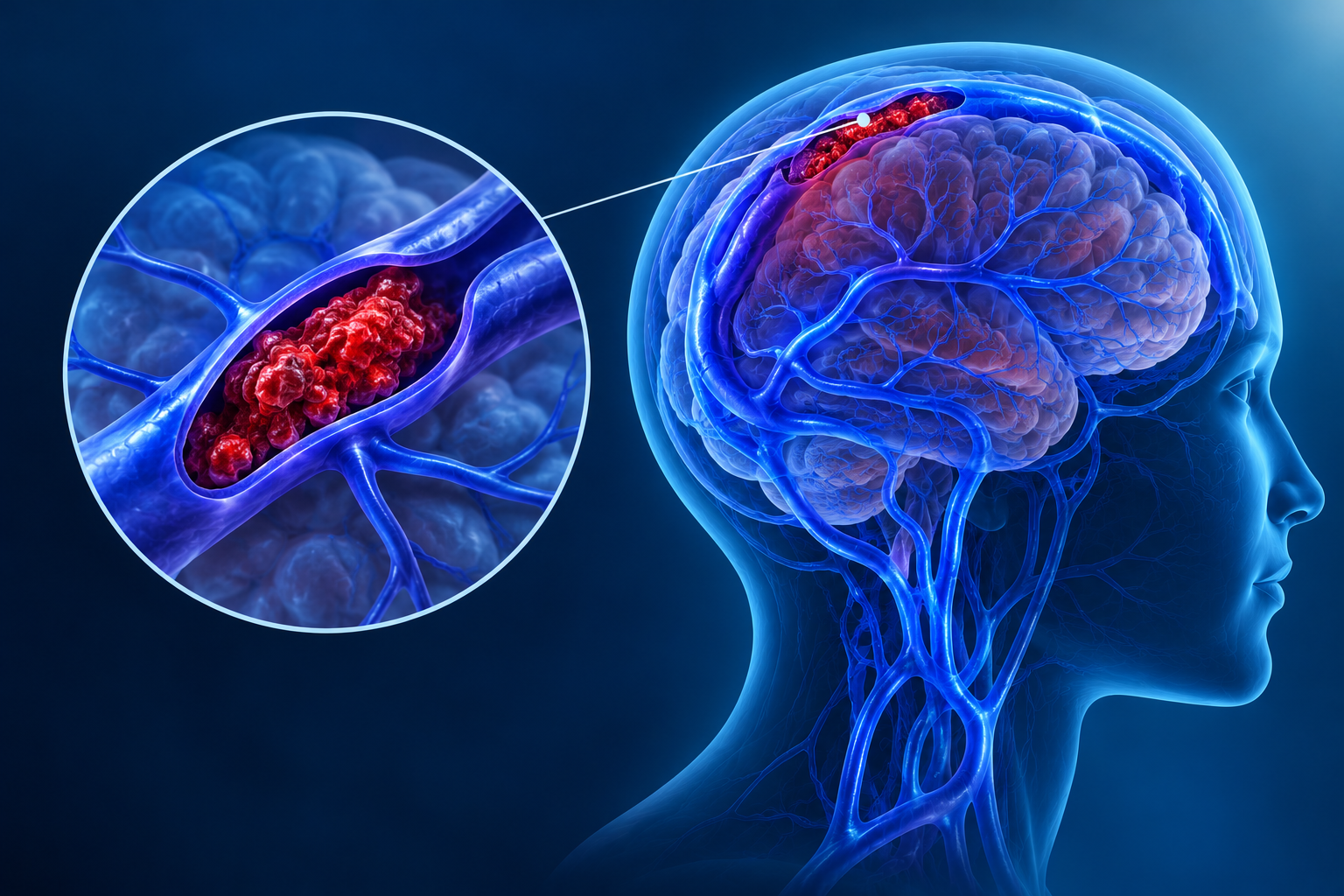
Cerebral venous thrombosis (CVT), also called cerebral venous sinus thrombosis when the sinuses are involved, affects the pathways that carry blood away from the brain. It requires appropriate clinical assessment and imaging.
A clot obstructs one or more veins or venous sinuses that drain the brain. This can increase pressure within the venous system and may cause swelling or bleeding.
Symptoms can vary considerably. Medical assessment and appropriate brain and venous imaging help establish the diagnosis and assess possible complications.
Management depends on the clinical condition, imaging findings, underlying causes, complications and the person's overall health.
CVT may develop with different symptoms, sometimes gradually and sometimes more suddenly.
Evaluation is guided by symptoms, examination findings, imaging and relevant medical history. The appropriate approach varies from person to person.
Review of symptoms, neurological examination, medical history and potential contributing factors.
CT or MRI with appropriate venous imaging, such as CT venography or MR venography, may be used to evaluate the cerebral veins and venous sinuses.
Treatment may include anticoagulation and management of the underlying cause or complications, according to specialist assessment and clinical guidelines.
Follow-up may include clinical review, assessment of recovery, monitoring for complications and repeat imaging when clinically indicated.
In selected patients with severe CVT or clinical deterioration despite appropriate treatment, an endovascular approach may be considered by a specialist team. It is not required for every patient, and its potential benefits and risks must be assessed individually.
Contact Dr. Roopa Seshadri's practice to enquire about consultation arrangements and the evaluation of neurovascular conditions.
A consultation is required to determine the appropriate investigations and treatment options for an individual.
+91 80885 69130
2nd Floor, Boggaram Towers,
12th Main Road, 4th
Block,
Jayanagar, Bengaluru – 560011
General information about cerebral venous thrombosis. Individual diagnosis and treatment require medical assessment.
CVT may be associated with conditions that increase blood-clotting tendency, pregnancy or the postpartum period, certain medications, infections and other medical conditions. In some people, a clear cause is not identified.
Diagnosis usually involves clinical assessment and appropriate imaging. CT venography or MR venography can help identify clots in the cerebral venous system. The investigations required depend on the presentation.
Treatment is available, and many patients recover, although outcomes vary with the severity of the condition and any complications. Management commonly involves anticoagulation when appropriate, treatment of contributing causes and monitoring for complications.
No. Endovascular treatment is considered only in selected circumstances. A specialist team assesses disease severity, response to initial treatment, imaging findings, potential benefits and procedural risks.
Sudden severe headache, seizure, new weakness, difficulty speaking, confusion or loss of consciousness requires immediate emergency assessment. Do not wait for an appointment or use this website to assess an emergency.
This information is educational and does not replace individual medical advice.
Medical information disclaimer: This page provides general educational information about cerebral venous thrombosis. It is not a substitute for professional medical advice, diagnosis or treatment. Treatment decisions depend on individual clinical findings. In an emergency, seek immediate medical care.