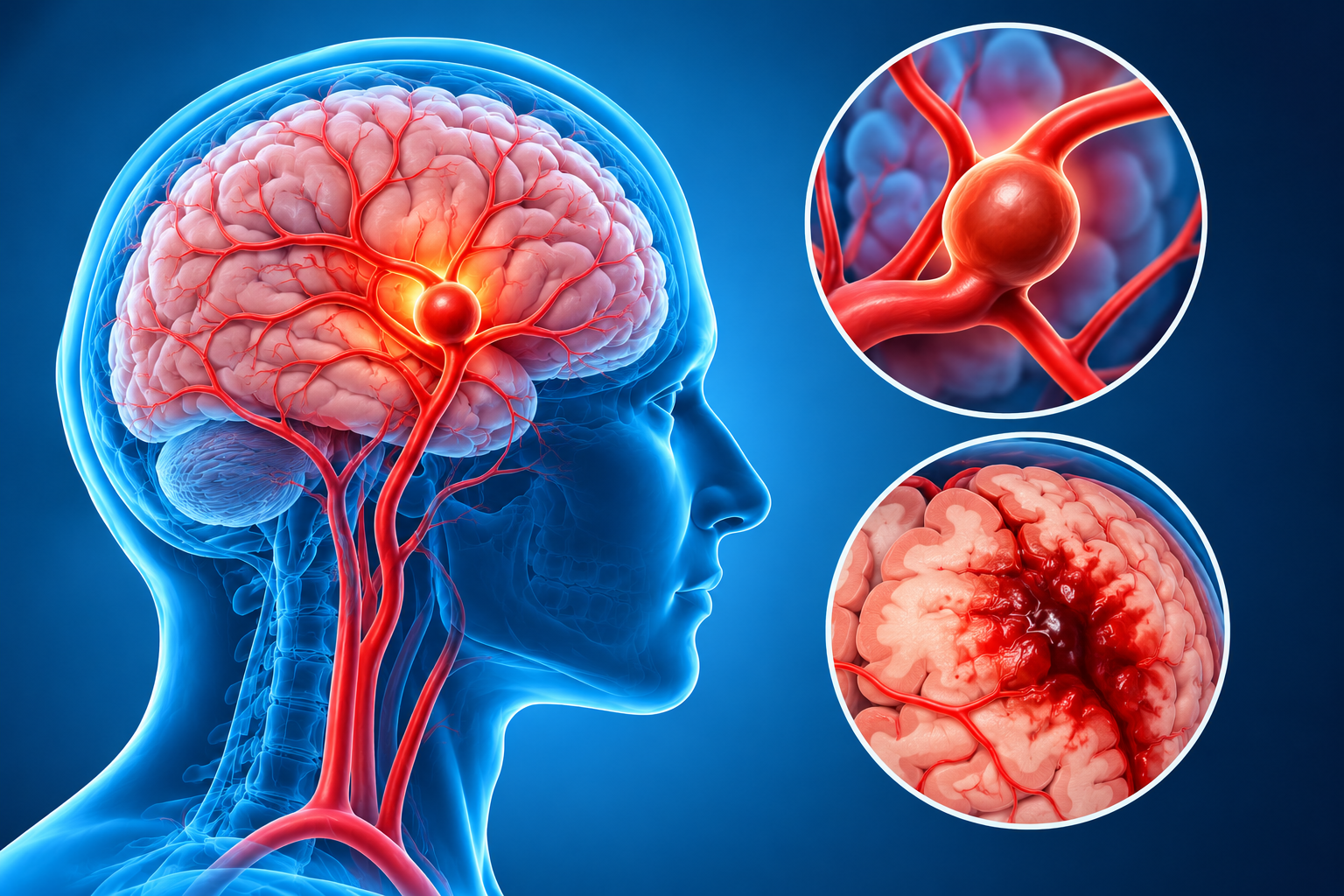
Cerebral Aneurysm
A weakened area of a brain artery wall may bulge outward. Some aneurysms are discovered incidentally; others may rupture and cause life-threatening bleeding.
Information about cerebral aneurysms, intracranial haemorrhage and neurovascular assessment, including endovascular treatment options where clinically indicated.
General patient education · Individual assessment is essential
Recognise a medical emergency. A sudden, extremely severe headache, new weakness, facial drooping, difficulty speaking, collapse or reduced consciousness requires immediate emergency assessment. Call your local emergency service. Do not wait for a routine appointment.
Blood vessels supply the brain with oxygen and nutrients. An aneurysm, a weakened area of a blood vessel wall, or bleeding within or around the brain can require urgent assessment and specialist care.
Evaluation may involve neurological assessment, brain imaging and vascular imaging. The appropriate management depends on the diagnosis, location, size, symptoms, overall health and other individual clinical factors.
Dr. Roopa Seshadri's stated clinical interests include stroke and neurovascular intervention. Consultation can help determine whether specialist assessment or an intervention is appropriate.
Learn about selected conditions affecting the blood vessels in and around the brain.
A weakened area of a brain artery wall may bulge outward. Some aneurysms are discovered incidentally; others may rupture and cause life-threatening bleeding.
Bleeding within the skull can occur in different locations and for different reasons. It requires urgent medical evaluation to identify the cause and guide management.
Arteriovenous malformations and fistulas are abnormal connections between arteries and veins. Their location, blood-flow pattern and clinical effects help guide evaluation.
Some patients require assessment for other cerebrovascular disorders, including selected arterial abnormalities and conditions associated with neurological symptoms.
Management of a brain aneurysm or intracranial bleed depends on the specific diagnosis and clinical circumstances. Not every condition requires an intervention.
Review of symptoms, medical history, examination findings and existing reports.
Appropriate CT, MRI or vascular imaging to help clarify the diagnosis.
Depending on the case, options may include observation, medical management, surgery or an endovascular procedure.
Follow-up and monitoring are planned according to the diagnosis and treatment selected by the clinical team.
Endovascular procedures, including selected forms of aneurysm coiling or other vascular treatments, are considered only when appropriate for the individual patient. Suitability, risks, alternatives and expected outcomes require specialist discussion.
Neuro-Vascular Intervention, Stroke & Aneurysm Specialist
Dr. Roopa Seshadri's clinical interests include stroke, cerebral vascular disorders and neurovascular intervention. An individual consultation helps determine the appropriate assessment and possible management pathways for each patient's condition.
KMC Registration No. 69765
Know About the SpecialistClinical assessment and diagnostic review
Discussion of appropriate management options
Individualised follow-up planning
Treatment decisions depend on individual clinical findings.
General answers to common questions about brain aneurysms and brain bleeds. Individual medical advice requires professional assessment.
For consultation availability and appointment enquiries concerning brain aneurysms, neurovascular conditions or stroke-related concerns, contact the practice directly.
Call for Consultation EnquiriesThis contact facility is not an emergency medical service.
2nd Floor, Boggaram Towers,
12th Main Road, 4th
Block,
Jayanagar, Bengaluru – 560011
Please contact the practice to confirm current availability and timings.