NEUROVASCULAR CARE

AVM & AVF Care

Understanding Vascular Malformations of the Brain and Spine

Arteriovenous malformations (AVMs) and arteriovenous fistulas (AVFs) are abnormal connections between blood vessels that may require specialist assessment. Learn about diagnostic evaluation and the treatment approaches that may be considered for individual cases.

Specialist Assessment Endovascular Options Individualised Care

Dr. Roopa Seshadri Neuro-Vascular Intervention

Medical imaging environment representing neurological assessment
Neurovascular Assessment Imaging · Evaluation · Treatment Planning
01
AVM Vascular malformation
02
AVF Abnormal vascular connection
Anatomy illustration and clinical assessment
01 UNDERSTANDING THE CONDITIONS

What are AVM and AVF?

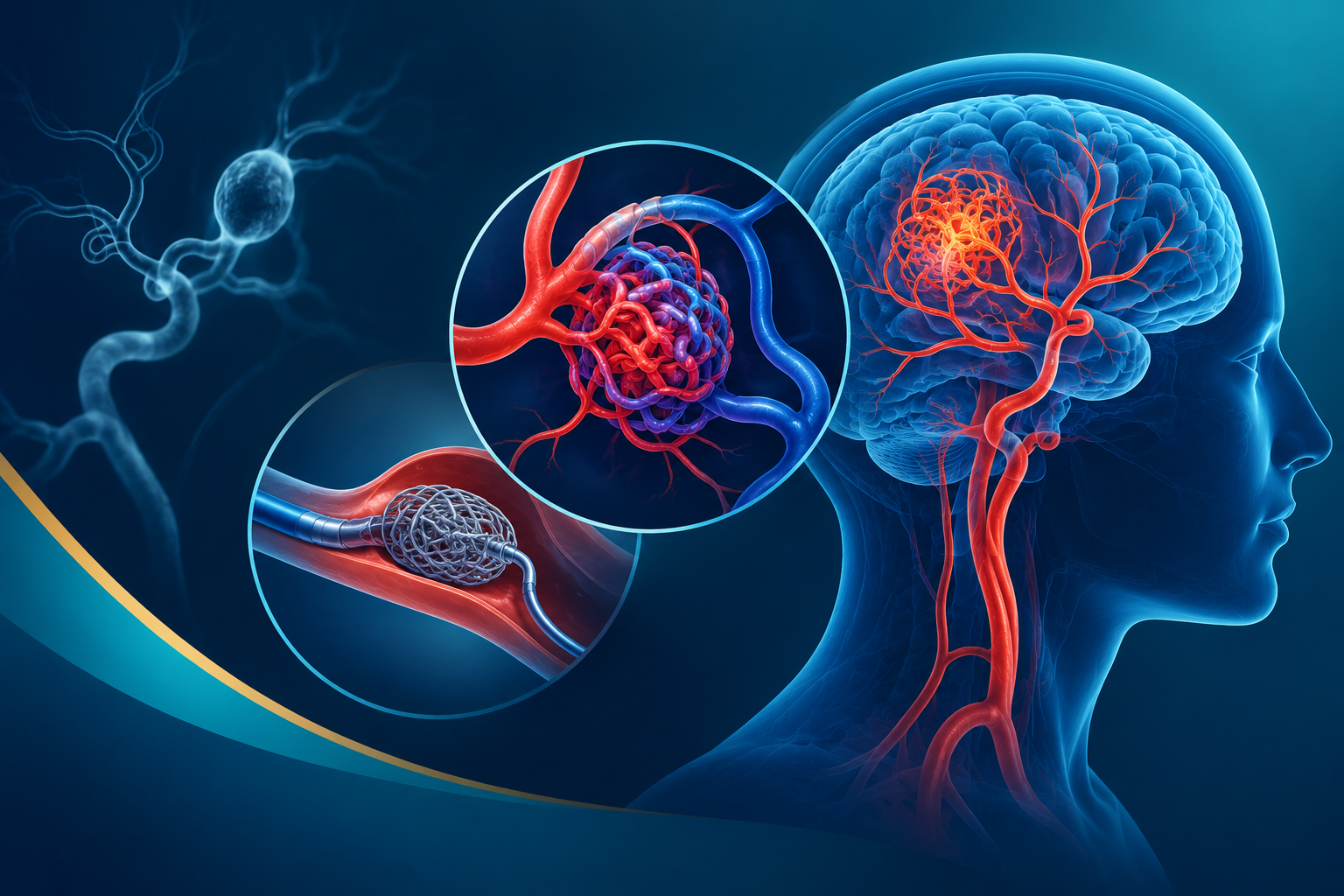
Arteriovenous malformations and arteriovenous fistulas are vascular conditions involving abnormal connections between arteries and veins. They can occur in the brain, spinal region or other parts of the body.

Their location, blood-flow characteristics, associated symptoms and potential risks vary. Assessment helps determine whether observation, further investigation or treatment should be considered.

Not every AVM or AVF requires the same treatment. Management depends on the individual diagnosis and clinical findings.

01

Arteriovenous Malformation

AVM

An AVM is an abnormal network of blood vessels in which arteries connect to veins without the usual intervening capillary network.

Assessment may include

  • Review of symptoms and medical history
  • Brain or spinal imaging, as indicated
  • Assessment of vascular anatomy and risk
02

Arteriovenous Fistula

AVF

An AVF is an abnormal direct connection between an artery and a vein. Intracranial and spinal dural fistulas are examples that may require specialist neurovascular assessment.

Assessment may include

  • Clinical and neurological evaluation
  • Appropriate vascular imaging
  • Assessment of drainage patterns and risks
02 ASSESSMENT AND MANAGEMENT

A structured approach to AVM & AVF care

Evaluation and management are guided by the type and location of the vascular abnormality, the available imaging and the person's individual clinical circumstances.

01

Clinical Evaluation

Review of symptoms, relevant history, existing investigations and clinical findings.

02

Diagnostic Imaging

MRI, MRA, CT angiography or catheter angiography may be considered when clinically appropriate.

03

Treatment Planning

Discussion of observation, intervention, possible risks, alternatives and referral needs.

04

Follow-up

Clinical review and follow-up imaging, when indicated by the diagnosis and treatment plan.

ENDOVASCULAR CARE
03 POSSIBLE TREATMENT APPROACHES

Treatment decisions begin with assessment.

Depending on the type of AVM or AVF, its location and associated risks, a specialist may discuss one or more management options.

01

Endovascular Embolisation

A catheter-based procedure that delivers an embolic material to a targeted vascular connection or abnormality in selected cases.

02

Observation and Monitoring

Some conditions may be monitored with clinical reviews and imaging, depending on the assessment of risks and benefits.

03

Multidisciplinary Management

Selected cases may require discussion with neurosurgery, neurology, radiation specialists or other relevant clinical teams.

No particular procedure is suitable for every patient. The appropriate plan, potential benefits, risks and alternatives require individual clinical evaluation.
04 CONSULTATION INFORMATION

Have questions about AVM or AVF?

Arrange a consultation enquiry with Dr. Roopa Seshadri to discuss the available assessment process and the next steps relevant to your clinical situation.

CONSULTATION LOCATION

2nd Floor, Boggaram Towers,
12th Main Road, 4th Block,
Jayanagar, Bengaluru – 560011

EMAIL ENQUIRIES roopanimhans@gmail.com
KMC Registration No. 69765
Medical information disclaimer

This page provides general educational information and is not a substitute for individual medical advice, diagnosis or treatment. Treatment options depend on clinical findings and specialist assessment. Seek emergency care for sudden or severe neurological symptoms.